
European Centre for Counterterrorism and Intelligence Studies, Germany & aNetherlands – ECCI
Strategic rift: right-wing forces struggle to find a united front on defense
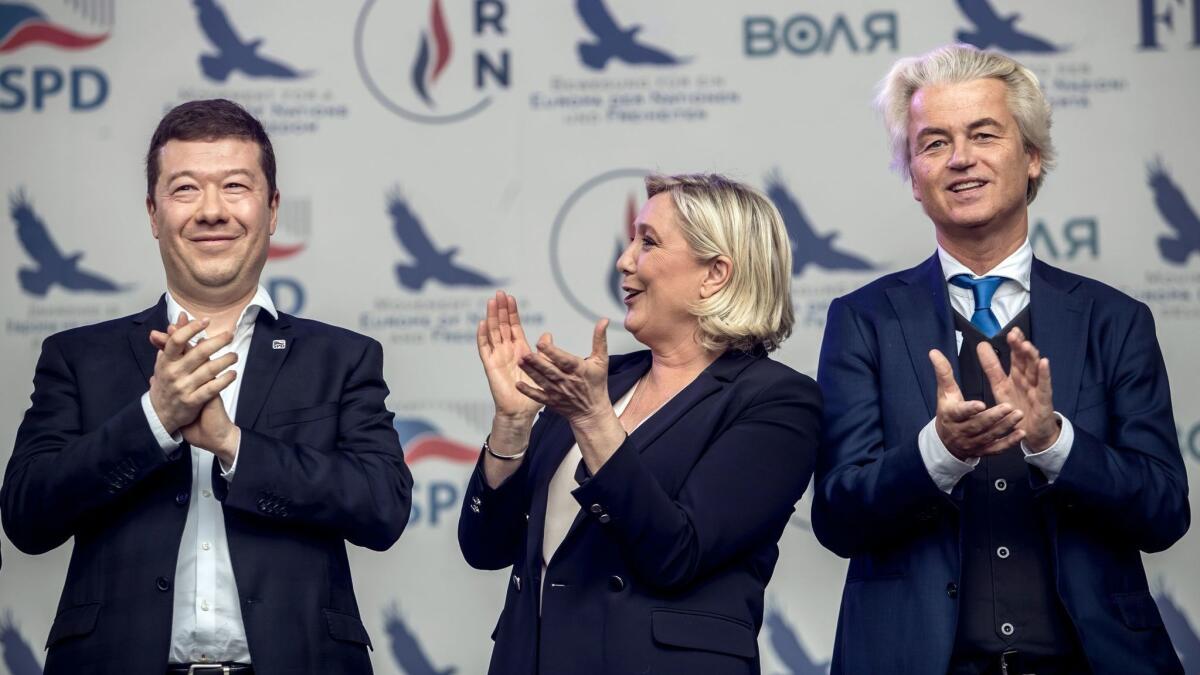
The Parliament ـ Over the next year and a half, voters across several EU countries, including most of the bloc’s largest economies, will go to the polls. These elections could tilt the political balance to the right, coinciding with Europe’s drive to increase defense spending — an area where the right-wing parties remain divided.
For right-wing parties that have traditionally focused on a strong national defense, Europe’s evolving security landscape poses a challenge. Effective defense requires collaboration at a supranational level, through institutions such as NATO and the EU, pooling procurement and coordinating military capabilities across borders.
Yet right-wing forces remain divided over how far that cooperation should go, whom Europe should be prepared to confront and how much power should be given to Brussels.
While parties such as Italian Prime Minister Giorgia Meloni’s Fratelli d’Italia have moved closer to the mainstream on issues such as the ReArm Europe plan and the creation of a European pillar within NATO, others, such as Marine Le Pen’s Rassemblement National, want France to withdraw from the Alliance’s joint commands and have even sought to impose conditions on financial support for Kyiv.
“Defense is no longer this easy national topic where as a far-right party you are in favor of strong national defense,” said Manuel Müller, visiting professor at the College of Europe in Bruges.
For Müller, the geopolitical context — and the need for collaboration between nations and the far-right itself — has created new dilemmas and divisions over NATO’s role, support for Ukraine and dependencies on third countries within their ranks, particularly among Patriots for Europe.
“Today, defense often means more [European] integration,” which traditional right-wing parties oppose, he said. “There’s also the question of having Russia’s Vladimir Putin or U.S. President Donald Trump as an ally,” said Müller adding that then defense policy becomes a question about who to defend against.
Power changes the calculus
Defense and security policies are areas where right-wing parties frequently diverge, but their strategies can vary even more depending on whether they want to be seen as a party of opposition or a party of government.
According to data from Howtheyvote.eu, MEPs from the Czech ANO party increased their support for EU defense initiatives after winning the national elections in October 2025. Since then, they have either abstained or voted in favour of key files such as the European Defence Industry Program and measures to strengthen the bloc’s military mobility and simplify procedures for defense companies.
“When far-right parties are not in the driving seat, defense [policy] can be used as a tool for campaigning,” said Raffaele Mastrorocco, a researcher with the Diplomacy and Global Affairs group at Leiden University.
Poland offers a case in point. Although poised to gain significantly from the European Commission’s low-interest defense loans under the SAFE program, the conservative nationalist president, Karol Nawrocki, opposed the plan favored by liberal conservative Prime Minister Donald Tusk. He voted against the loans, arguing that the nation’s security “cannot depend on foreign decisions.”
Italy has offered a similar example, according to Mastrorocco. Meloni’s government supported the SAFE defense loans until opposition parties — and even members of her governing coalition — began mobilizing against them.
Mastrorocco sees this as part of a broader dynamic. “Where far-right parties have increased in numbers, we can expect that the radicalization of other far-right parties will also happen,” he said.
But Elena Donazzan, an MEP from Meloni’s party, rejects the idea that competition from further-right forces is likely to alter Italy’s position on international affairs and defense.
“I don’t believe that Fratelli d’Italia needs to follow anyone,” she said. “We have our own line, grounded in national interest, security, and the strength of the transatlantic relationship.”
The geography of defense
Becoming a governing party or remaining in opposition is only part of the story. Geography, economic interests and different threat perceptions also shape how Europe’s right-wing parties approach defense.
Russia’s war in Ukraine and the intensifying rivalry between great powers have made it difficult for Europe’s right-wing parties to maintain anti-NATO and pro-Russian stances.
“It has just become much less acceptable for the mainstream to be friendly to Moscow,” Müller said.
For Fratelli d’Italia, he added, that has meant becoming more pro-NATO, more openly opposed to Russia and more explicit about both. For parties such as Italy’s Lega and France’s Rassemblement National, it has meant toning down their pro-Russia positions to become “at least a bit more acceptable.”
Rassemblement National now supports Kyiv, including military aid, in its “war of resistance,” said MEP Pierre-Romain Thionnet, from Le Pen’s party, in a written statement to The Parliament. But the party opposed Ukraine’s €90 billion loan, “not because we wish to see Ukraine collapse, which would be contrary to our interests, but because of the lack of solid guarantees of repayment,” he added.
For Spanish MEP Jorge Buxadé (PfE), national delegations’ positions are also shaped by the economic and social effects of the EU’s response to the war.
“Hungary was suffering economically a lot because of the measures related to gas, the Czech Republic as well, even Poland,” he said. “By contrast, delegations such as the Italian or Spanish ones have maintained almost the same position as in the previous legislative term.”
The deeper divide is over what European defense should ultimately look like. The mainstream is edging, albeit slowly, toward greater integration: joint procurement, NATO exercises and shared command-and-control capabilities. Much of the right remains more comfortable with cooperation between national governments than with transferring powers to Brussels.
Geography partly explains the differences. Countries near Russia tend to have different security concerns than those further west, and those with large defense industries tend to protect their own interests.
France has pushed to prioritise European firms, while countries such as the Netherlands, Romania and Belgium have preferred allowing suppliers from trusted partners such as the United States.
“We must increase our own defense capacity whilst preserving strong cooperation with NATO allies,” said MEP Assita Kanko (ECR, BE).
Rachel Blom, a Dutch MEP with the Patriots for Europe group, made a similar argument: “Preference should be earned, not legislated.”
Even when these parties support higher defense spending or large European projects such as Eastern Flank Watch, they tend to present them as instruments of national security rather than steps toward greater control from Brussels.
That tension will surface again in the Commission’s forthcoming proposal for a single market for defense equipment and services.
“I draw a clear distinction between technical harmonisation, which I support, and the centralisation of decision-making, which I reject,” said MEP Claudiu-Richard Târziu (ECR, RO). A single market for defense, the Romanian conservative added, would make sense if it meant common standards and simpler procedures for joint procurement. “We don’t want a mechanism through which Brussels decides what each national army should buy.”
Where the cracks may appear
Those differences matter most when they reach the institutions that have to turn Europe’s defense ambitions into policy. Analysts say it is difficult to predict how far these dynamics will affect NATO or EU rearmament plans through 2030. But they point to one area where disruption could be felt sooner: the Council, where decisions on defense and the EU budget often require unanimity among the 27 member states.
“As an anti-EU defense party, you only need to control one member state to make everything very, very difficult,” Müller said.
For Mastrorocco, the battle above all, will be about money. Governments may agree on the need to spend more on defense while disagreeing over who should pay, who should benefit and who should decide how the money is spent.
“There will definitely be more attention to reducing the national resources that are needed to delegate to the European Union, but also kind of the conditions that are required to actually access these loans.”
Geography will complicate that further. These parties tend to view national security through the lens of their countries’ history and perceived threats, Mastrorocco said. A government on NATO’s eastern flank is likely to see Russia differently from one on the Mediterranean, where migration can loom larger in the definition of security.
“We could expect the Baltic countries to be harsher on the Russian threat,” he argued, “but Italy, Spain, Portugal, could be less and less interested in cooperating on such subjects because for them the threat is definitely coming from the south.”
For the EU, the test will now be whether its push for greater defense cooperation can survive a political map in which the threats — and the interests — look increasingly different from one capital to the next.
European Centre for Counterterrorism and Intelligence Studies, Germany & aNetherlands – ECCI


